Dual addiction occurs when two or more addictions exist together simultaneously. This can involve multiple substance addictions, such as alcohol and opioids, or a combination of substance and behavioral addictions, like cocaine use and gambling. The complexity increases when addictive behaviors reinforce and perpetuate each other, creating an interconnected cycle of dependency that requires coordinated intervention across both conditions.
Understanding dual addiction is critical for effective treatment planning. Each addiction typically has its own biological, psychological, and social factors that drive and maintain it. When present together, these addictions interact in ways that increase clinical severity, complicate withdrawal management, and raise relapse risk. Treatment must address both simultaneously rather than sequentially to achieve sustainable recovery outcomes.
What Is Dual Addiction And How Is It Different From Dual Diagnosis?
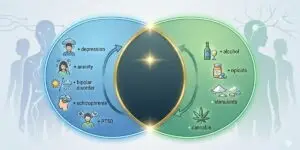
Dual addiction refers specifically to the presence of two or more addictive dependencies occurring at the same time. This differs fundamentally from dual diagnosis, which describes addiction co-occurring with a mental health disorder such as depression, anxiety, PTSD, or bipolar disorder. With dual addiction, both conditions are addictive in nature. With dual diagnosis, addiction exists alongside a psychiatric condition that may have contributed to addiction development or emerged as a consequence of substance use. The distinction matters because it shapes treatment priorities: dual addiction treatment focuses on managing multiple dependencies simultaneously, while dual diagnosis treatment integrates addiction-focused care with psychiatric intervention to address both the mental health and addictive components of the person’s condition.
Why Does Dual Addiction Make Treatment More Complex?
Dual addiction amplifies clinical complexity in several critical ways. When two addictions are present, they typically reinforce each other through shared neurobiological pathways, overlapping triggers, and interconnected reward cycles. This means that recovery from one addiction alone may leave the other unaddressed, allowing it to intensify and drive relapse. Withdrawal management becomes more challenging because the person experiences simultaneous withdrawal symptoms from multiple substances or behaviors, each with distinct timelines and severity profiles. Additionally, the psychological coping mechanisms that maintained one addiction may transfer to the other addiction, creating new challenges in behavioral change. The combined physiological burden of managing multiple dependencies increases medical complexity and raises relapse risk significantly compared to single addiction treatment.
How Is Dual Addiction Treated?
Treatment of dual addiction requires integrated, coordinated care that addresses both addictions simultaneously rather than treating them sequentially. The approach typically combines medical stabilization when necessary to manage withdrawal or co-occurring health risks, comprehensive psychotherapy that focuses on behavior change and trauma processing underlying both addictions, and medication management for co-occurring psychiatric symptoms when indicated. Long-term relapse-prevention planning must specifically target the interaction between the two addictions, helping the person recognize shared triggers and develop distinct coping strategies for each. Coordinated care between addiction specialists, medical providers, and mental health professionals is essential. Treatment planning must account for how one addiction may serve as an escape from withdrawal of the other, requiring strategies that address this interdependence. When dual addiction is present, integrated treatment is not optional – it is the most reliable path to durable, long-term recovery.
Frequently Asked Questions About Dual Addiction
1. What Is Dual Addiction?
Dual addiction means two or more addictions exist at the same time. This can involve multiple substance addictions or a combination of substance and behavioral addictions. Both addictions reinforce each other and must be treated together to achieve lasting recovery. When one addiction exists alone, treatment is simpler. When dual addiction is present, the interaction between the two addictions increases complexity and relapse risk.
2. How Is Dual Addiction Different From Dual Diagnosis?
Dual addiction involves two addictive disorders existing together. Dual diagnosis means addiction co-occurs with a mental health condition like depression or PTSD. The distinction is important because it shapes treatment approach. Dual addiction treatment focuses on managing multiple dependencies simultaneously. Dual diagnosis treatment integrates addiction-focused care with psychiatric intervention to address both mental health and addiction components effectively.
3. Can Both Addictions Be Treated At The Same Time?
Yes, both addictions must be treated simultaneously for effective recovery. Treating one addiction alone often allows the other to intensify and drive relapse. Integrated treatment addresses both dependencies through psychotherapy, behavioral strategies, and medication when needed. Treatment plans must specifically target the interaction between the addictions and how each reinforces the other, providing distinct coping strategies for managing each one effectively.