Fraud Blocker

CARRARA TREATMENT / ADDICTION EXPERTS

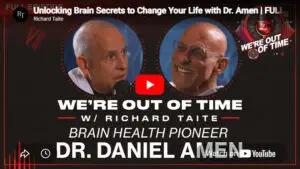
Unlocking Brain Secrets to Change Your Life with Dr. Amen

EPISODE 59|34 min
Home/Addiction Experts/Unlocking Brain Secrets to Change Your Life with Dr. Daniel Amen | We’re O...

Episode Takeaways

  • Psychiatry is the only medical specialty that does not routinely image the organ it treats, and Dr. Amen argues this diagnostic gap is directly responsible for stagnant outcomes in mental health care.
  • Depression should be understood as a symptom with dozens of possible causes — not a diagnosis — and treating it without biological data is comparable to treating all chest pain with the same medication.
  • Social media's dopamine-depletion mechanism is a direct pipeline to substance use: once the brain's pleasure center is worn out from constant digital stimulation, drugs and alcohol become the next source of relief.
  • Chronic pain and emotional pain share the same brain circuits, and the doom loop of pain, fear, negative thoughts, and substance use can be interrupted by addressing the brain's suffering pathway rather than just managing symptoms.
  • Addiction recovery becomes sustainable when treatment prioritizes measurable brain health improvements — including nutrition, targeted supplementation, cognitive restructuring, and in some cases guided neurostimulation.

About This Episode

Brain health refers to the physical condition and functional capacity of the brain — its blood flow, neurochemistry, and structural integrity — which directly shapes cognition, emotion, and behavior. In this episode of We’re Out of Time, Dr. Daniel Amen discusses how brain imaging is fundamentally changing the way clinicians understand and treat psychiatric disorders, addiction, and chronic pain.

Dr. Amen is a double board-certified psychiatrist, distinguished fellow of the American Psychiatric Association, twelve-time New York Times bestselling author, and the founder of Amen Clinics, which has amassed the world’s largest database of brain scans for psychiatry — more than 225,000 scans from patients in 155 countries. His career has been defined by a single argument: psychiatry is the only medical specialty that never looks at the organ it treats, and that needs to change.

In this conversation with host Richard Taite, Dr. Amen covers the neuroscience behind his approach — why he considers depression a symptom rather than a diagnosis, how social media is depleting dopamine stores in young people, why chronic pain and emotional suffering share the same brain circuits, and how the concept of brain reserve explains why two people can experience the same trauma with vastly different outcomes. He also discusses the intersection of brain health and addiction recovery, arguing that treatment centers need to prioritize getting the brain physically healthy rather than focusing solely on behavioral interventions. For individuals and families navigating addiction or mental health concerns, the conversation offers a framework that centers on biology rather than labels.

Key Insights

Why Does Dr. Amen Say Depression Should Not Be a Diagnosis?

▶ 04:20

Dr. Daniel Amen argues that depression should be treated like chest pain — as a symptom with many possible causes, not as a standalone diagnosis. He draws a direct comparison: a cardiologist who gave every patient with chest pain the same treatment would lose their license, yet millions of people receive SSRIs without any biological data about what is actually happening in their brain. According to Dr. Amen, this approach persists because psychiatry has historically relied on symptom clusters rather than imaging. He contends that depression can stem from brain inflammation, hormonal imbalances, head trauma, grief, toxin exposure, or dozens of other root causes — each requiring a different treatment strategy. Without looking at the brain through imaging tools, clinicians are essentially guessing. Dr. Amen notes that psychiatric outcomes have not improved since 1954 despite advances in pharmacology, which he attributes directly to this diagnostic blind spot.

How Does Social Media Deplete Dopamine and Drive Substance Use?

▶ 06:39

Dr. Amen explains that social media platforms are systematically depleting dopamine stores in young people through constant digital stimulation. Every notification and scroll triggers a small dopamine release in the nucleus accumbens, the brain’s primary pleasure center. Over time, this constant stimulation wears out the receptor system, leaving individuals unable to find pleasure in normal activities — a state that closely mirrors early-stage addiction. He points to data showing suicide among young people has risen 746 percent since 2000 and notes that 57 percent of teenage girls report persistent sadness. Dr. Amen connects this directly to substance use, explaining that when dopamine pathways are exhausted, individuals turn to drugs and alcohol because those substances temporarily restore the sensation of pleasure. The platforms, he argues, are designed to maximize engagement through algorithms that amplify sadness, anger, and anxiety — emotions that keep users scrolling longer.

What Is the Doom Loop That Connects Chronic Pain to Addiction?

▶ 14:47

In discussing his book Change Your Brain, Change Your Pain, Dr. Amen introduces the concept of the doom loop — a self-reinforcing cycle where physical or emotional pain activates the brain’s fear center, which smears the pain signal with dread and catastrophic thinking. This triggers automatic negative thoughts, which increase muscle tension, intensify the original pain, and drive people toward substances like opioids, benzodiazepines, or alcohol for relief. Those substances provide temporary respite but flatten dopamine function further, perpetuating the cycle. He explains that chronic pain involves three distinct brain pathways: the feeling pathway through the thalamus and sensory cortex, the suffering pathway through the anterior cingulate gyrus, and the calming pathway through the frontal lobes. When the calming pathway is compromised, the brain cannot modulate pain effectively, and the loop accelerates. Dr. Amen notes that people with chronic pain have significantly elevated suicide risk precisely because this cycle convinces them nothing will ever improve.

What Is Brain Reserve and Why Does It Determine Trauma Outcomes?

▶ 20:20

Dr. Amen describes brain reserve as the cumulative resilience of the brain built over a lifetime — and the primary factor determining how an individual responds to traumatic events. He illustrates the concept with two soldiers exposed to the same blast in the same tank in Iraq: one walks away unharmed while the other is permanently disabled. The difference, he argues, is the brain each person brought into that moment. Factors that diminish brain reserve include prenatal maternal stress, childhood nutritional deficiencies, early head injuries, and environmental toxin exposure. He emphasizes that brain imaging can differentiate between PTSD and traumatic brain injury, which is critical because the two conditions require opposite treatment approaches. Emotional trauma tends to activate brain circuits while physical trauma deactivates them. Dr. Amen has raised concerns about treating patients whose brain imaging shows already-reduced activity with antidepressants that further decrease activity, arguing this can make patients worse rather than better. This is why he argues individualized brain assessment is essential rather than optional.

What Happens in the Brain When Someone Breaks Free from Addiction?

▶ 24:02

Dr. Amen states that when cravings lose their power over someone in recovery, the fundamental change is biological: their brain is getting healthier. He describes working with patients whose addiction diminished not through willpower alone but through measurable improvements in brain function. Central to his approach is the one-page miracle exercise, where patients write down their goals for relationships, work, finances, and health on a single page. He explains that the brain makes happen what it sees, and without clear goals, people default to following the crowd — which is often headed toward relapse. Dr. Amen also identifies a gap in mainstream addiction treatment: most treatment centers never discuss brain health directly or examine the brain. He argues that recovery becomes sustainable when individuals understand their brain’s specific vulnerabilities and address them through targeted nutrition, supplementation, cognitive techniques like challenging automatic negative thoughts, and in some cases guided neurostimulation.

Clinical Context

The relationship between brain health and substance use disorders has become an increasingly central focus in addiction medicine research. According to the National Institute on Drug Abuse (NIDA), addiction is defined as a chronic, relapsing disorder characterized by compulsive drug seeking and use despite adverse consequences, rooted in long-lasting changes to brain circuits involved in reward, stress, and self-control. NIDA’s 2020 Principles of Drug Addiction Treatment report emphasizes that effective treatment must address the biological, psychological, and social dimensions of substance use — a framework that aligns with Dr. Amen’s argument that brain health should be a foundational component of recovery.

Research published in The Lancet Psychiatry (2019) has documented that individuals with substance use disorders show measurable reductions in prefrontal cortex activity, reduced dopamine receptor availability, and altered connectivity in the default mode network — all structures Dr. Amen discusses in this episode. The overlap between chronic pain and addiction is equally well-documented: the Substance Abuse and Mental Health Services Administration (SAMHSA) reports that approximately 25 percent of people receiving opioid prescriptions for chronic pain misuse them, and roughly 10 percent develop an opioid use disorder.

At Carrara Treatment, Wellness & Spa, clinical teams assess each person’s neurological and psychological history as part of a comprehensive intake process. Learn more about Carrara’s individualized approach to addiction treatment: https://carraratreatment.com/treatment/. The clinical program integrates evidence-based modalities including cognitive behavioral therapy, EMDR for trauma processing, and nutritional support — recognizing that sustainable recovery requires addressing brain function alongside behavioral patterns. For individuals experiencing co-occurring chronic pain and substance use, Carrara’s dual diagnosis program provides coordinated care that treats both conditions simultaneously: https://carraratreatment.com/dual-diagnosis/

Understanding the biological basis of addiction does not replace the personal work of recovery — it contextualizes it. When individuals and families can see substance use disorders as conditions rooted in identifiable brain changes rather than moral failures, it opens the door to seeking professional evaluation and support without the stigma that often delays treatment.

About the Guest

Dr. Daniel G. Amen

Dr. Daniel G. Amen

MD, Double Board-Certified Psychiatrist - Founder and CEO, Amen Clinics

Amen Clinics

Daniel Gregory Amen, MD, is a double board-certified psychiatrist, distinguished fellow of the American Psychiatric Association, and the founder and chief executive officer of Amen Clinics, a network of brain health clinics operating in ten locations across the United States. He received his medical degree from Oral Roberts University School of Medicine, completed his general psychiatry residency at Walter Reed Army Medical Center, and trained in child and adolescent psychiatry at Tripler Army Medical Center. He holds an independent nuclear brain imaging certification through the State of California, earned after completing 200 hours of nuclear physics coursework and 1,000 hours of clinically supervised training. Dr. Amen has authored or co-authored more than 95 peer-reviewed scientific papers and over 40 books, including twelve New York Times bestsellers. His most widely known work, Change Your Brain, Change Your Life, has sold over one million copies. His most recent book, Change Your Brain, Change Your Pain, focuses on the neurological basis of chronic pain. He has hosted 19 national public television specials on brain health, and led a landmark brain imaging study with retired NFL players in which 80 percent of participants showed measurable improvement in brain function after completing his brain health protocol. Under his leadership, Amen Clinics has built the world's largest database of brain scans for psychiatry — more than 225,000 scans from patients across 155 countries.

Frequently Asked Questions

CONFIDENTIAL CONSULTATION

Take the First Step

Carrara Treatment, Wellness & Spa offers personalized care. Consult a clinician to explore your options.

(888) 383-5207Contact Us

Episode Details

  • Episode: 59
  • Duration: 34 min
  • Published: November 18, 2025

FEATURED GUEST

Featured Guest

Dr. Daniel G. Amen

Dr. Daniel G. Amen

MD, Double Board-Certified Psychiatrist

CARRARA TREATMENT

More Episodes

CARRARA TREATMENT, WELLNESS & SPA

Confidential Consultation Available

Carrara Treatment, Wellness & Spa offers personalized care. Consult a clinician to explore your options.

Call Now - Confidential, 24/7 (888) 383-5207