July 15, 2026
Last updated on August 21st, 2026 at 01:06 am
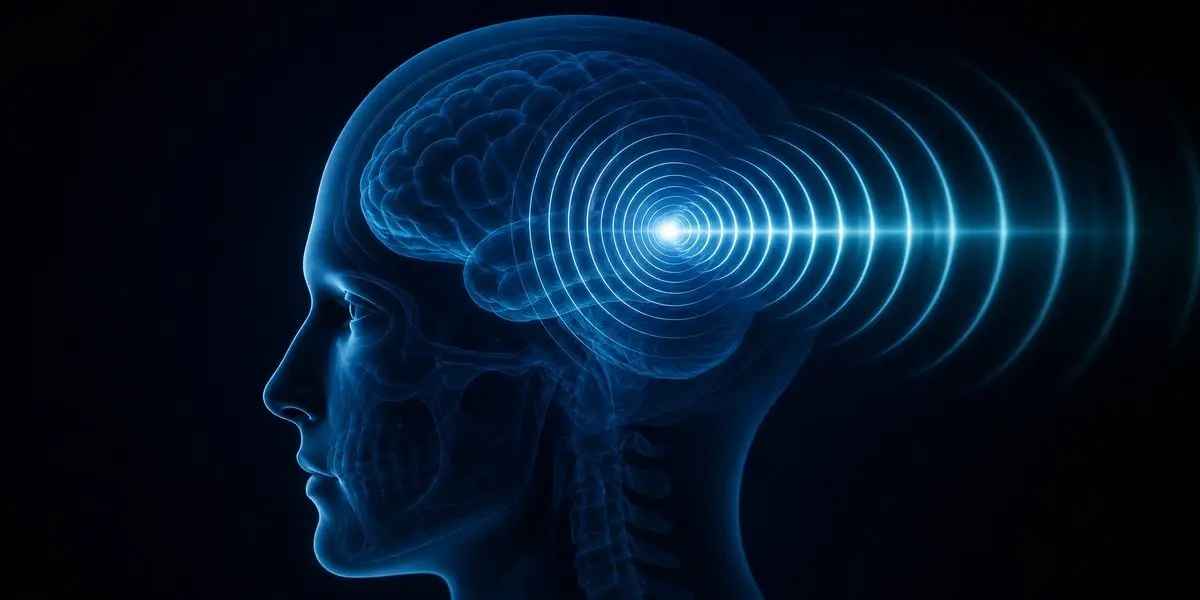
Not long ago, a team of neuroscientists and surgeons in Israel reported something that sounds like science fiction. A man in active opioid withdrawal underwent a 20-minute procedure with no scalpel, no incision, and no implanted device. At his worst, he had been taking as many as 130 painkiller pills a day. A week later, he tested free of opioids. Asked to rate his craving on a scale of one to ten, he said zero [1].
The procedure, performed at Rambam Health Care Campus in Haifa, used a technology called low-intensity focused ultrasound (LIFU) to reach a single structure deep in the brain [1]. It is worth being precise about what this was: one patient, in an early experimental trial, using a technology that is not approved and not available to the public [2]. It is not a cure anyone can book.
But the science underneath it is genuinely important, though not because of the device. It matters because of what it confirms about addiction itself: where it lives in the brain, why willpower is the wrong lens, and why the most effective care available today is the kind that treats the whole person, not just the craving.
At Carrara, we follow this research closely. We do not offer experimental procedures, and we are not about to. We follow the science because understanding the brain is the foundation of everything we do.
Addiction Lives in the Brain’s Reward Circuitry
To understand why the Israeli research is meaningful, it helps to understand what it targeted: a small, deep structure called the nucleus accumbens (NAc).
The nucleus accumbens is the hub of the brain’s reward system. In a healthy brain, it registers pleasure, motivation, and reinforcement. You feel it as the quiet surge of satisfaction after a good meal, a hard task finished, or a moment of real connection. Dopamine released there tells the brain, in effect, do that again. It is one of evolution’s oldest survival tools [3].
Addictive substances such as opioids, cocaine, and methamphetamine commandeer that tool, flooding the NAc with dopamine at levels no natural reward can match [3]. With repeated exposure, the circuitry adapts. Synapses change, receptor expression shifts, and the brain begins to treat the substance as more essential than food, safety, or the people a person loves [3].
That adaptation is why addiction is so tenacious. The connections between the NAc and the prefrontal cortex, the brain’s seat of judgment, planning, and impulse control, begin to weaken [3]. A person in active addiction is not making a free, rational choice to keep using. They are contending with a reward system that has been pulled badly out of balance. This is the line between a moral failing and a medical condition, and it is the entire premise of humane, effective treatment.
What Focused Ultrasound Does: The Evidence So Far
The technology, developed by the Israeli company Insightec, pairs real-time MRI guidance with focused sound waves [4]. In its high-intensity form, it is already FDA-approved for essential tremor and Parkinson’s disease, where it ablates a tiny piece of malfunctioning tissue, destroying it permanently [4].
The addiction research uses the opposite approach. Low-intensity focused ultrasound destroys nothing. It delivers gentle acoustic energy to temporarily modulate the electrical activity of the nucleus accumbens, dialing it up or down, with the goal of quieting the drive toward a substance while leaving the tissue intact [2].
The early findings are striking. In a study published in Biological Psychiatry, Dr. Ali Rezai’s team at the West Virginia University Rockefeller Neuroscience Institute treated eight people with severe opioid use disorder. After a single 20-minute session targeting the NAc, the group showed roughly a 91 percent average reduction in opioid craving that held through 90 days, and five of the eight abstained from all substances across that follow-up. Brain scans showed calmer connectivity between the reward center and the frontal regions that govern self-control [2].
Then the honest part. This was eight patients, with no control group and no blinding, followed for three months. It is a first look, not a verdict. The researchers themselves call for larger, sham-controlled trials before firm conclusions can be drawn, and those trials are only now getting underway [2, 5]. Because the method reaches powerful and delicate circuitry, its safety is still being carefully defined. Investigators in this field have documented adverse events, a reminder that this work has to be led by rigorous science rather than by headlines [5, 6]. Promising is the right word for this work. Proven is not.
The Limits of a Circuit-Level Fix
Suppose, for a moment, that this technology fulfills its promise and one day becomes a safe, standard tool. That would be a remarkable advance. It would also be, on its own, incomplete.
A craving is a symptom of a life. No device can reach a life.
Quieting the nucleus accumbens can turn down a craving. It cannot process the trauma that so often sits beneath the addiction. It cannot treat the depression or anxiety a person has been self-medicating for years. It cannot repair a marriage, rebuild a career, restore a sense of meaning, or teach someone how to move through a hard evening without reaching for relief.
This is what the research quietly confirms: addiction is multidimensional. The reward circuit is one node in a much larger web that includes memory, emotion, stress, identity, and relationship. Durable recovery is the work of tending that whole web. It is precisely what a device cannot do, and precisely what comprehensive treatment is built to do.
What Whole-Person, Neuroscience-Informed Treatment Looks Like
When you accept that addiction has reshaped the brain and touched every part of a life, the shape of good treatment comes into focus. It has to be comprehensive, individualized, and unhurried. Here is how that understanding shapes care at Carrara.
Treating co-occurring conditions together. The circuits involved in addiction overlap with those involved in trauma, depression, and anxiety. Treating the substance while ignoring the mental health condition underneath it leaves the reason for use in place. Our board-certified psychiatrists and clinical team address these diagnoses concurrently, so the brain is no longer reaching for a substance to manage untreated pain.
Rebuilding executive function. Because chronic use weakens the bridge between the reward center and the prefrontal cortex, that bridge has to be rebuilt. Modalities like Cognitive Behavioral Therapy (CBT) and Dialectical Behavior Therapy (DBT) are not just conversation; they are structured practice that helps lay down new neural pathways and restores the capacity to sit with distress without returning to use.
Healing trauma in the body. Trauma is held in the nervous system, keeping the brain in a state of quiet alarm that feeds craving. Approaches such as Eye Movement Desensitization and Reprocessing (EMDR) and somatic experiencing help the nervous system release what it has been carrying, lowering the background stress that so often drives relapse.
Restoring the natural reward system. When the reward system has been recalibrated by chemical highs, it has to relearn how ordinary life feels good again. This is why our integrative offerings, including movement, meditation, fitness, nourishing food, and therapeutic spa care, are clinical tools rather than mere amenities. They help a dysregulated nervous system find its baseline, and help a person feel at home in their body again.
Time, and undivided attention. Neuroplasticity does not run on a 30-day, insurance-driven clock. With a maximum of six clients and a 4:1 staff-to-client ratio, our clinicians have the room to understand each person in depth and to adjust as their needs evolve. Depth of attention is not a luxury detail here; it is part of the mechanism of healing.
The Real Takeaway
The focused ultrasound trials in West Virginia and Israel are a genuinely exciting frontier, and we will keep watching them closely. But their most valuable lesson is available today, to anyone considering treatment right now.
The lesson is not that a machine will soon make recovery easy. It is that the brain can change. The circuits driving addiction can be quieted, and they respond to the right intervention. Focused ultrasound pursues that at the level of a single circuit. Comprehensive treatment pursues it across the whole person: mind, body, history, and relationships, given the time they need to heal.
Recovery was never about white-knuckling through cravings. It is about giving the brain and the person the complete support they need to rebuild. That is the standard we hold ourselves to. It is the standard anyone seeking care deserves.
This article summarizes emerging research for educational purposes. It is not medical advice, and it does not describe a treatment offered at Carrara. Focused ultrasound for addiction is experimental and not approved or available to the public. Individual experiences of treatment vary.
References
[1] Gal, I. (2026). A new Israeli technology used at Rambam Hospital helped free a man from dependence on painkillers. The Jerusalem Post. https://www.jpost.com/israel-news/article-900599
[2] Rezai, A., Thompson-Lake, D.G.Y., … Mahoney, J.J. (2025). Focused Ultrasound Neuromodulation: Exploring a Novel Treatment for Severe Opioid Use Disorder. Biological Psychiatry, 98(1). https://www.biologicalpsychiatryjournal.com/article/S0006-3223(25)00023-X/fulltext
[3] Volkow, N.D., Michaelides, M., & Baler, R. (2019). The Neuroscience of Drug Reward and Addiction. Physiological Reviews, 99(4), 2115-2140.
[4] Insightec. Exablate Neuro: The therapeutic power of focused ultrasound. https://insightec.com/
[5] Low-Intensity Focused Ultrasound for Opioid Use Disorder: Early Evidence and Open Questions (2025). Biological Psychiatry (commentary). https://www.biologicalpsychiatryjournal.com/article/S0006-3223(25)01176-X/fulltext
[6] Rezai, A., Ranjan, M., Bhagwat, A., et al. (2025). Brain injury during focused ultrasound neuromodulation for substance use disorder. Brain Stimulation. https://www.brainstimjrnl.com/article/S1935-861X(25)00358-4/fulltext
Senior Medical Officer, Carrara Treatment Wellness & Spa
Dr. Kenneth Spielvogel is a board-certified physician with nearly 30 years of clinical experience and a specialized focus on addiction medicine, metabolic health, hormonal optimization, and long-term recovery. As Senior Medical Officer at Carrara Treatment Wellness & Spa, he helps lead a physician-driven approach to recovery that integrates medical, psychological, and lifestyle interventions to support lasting healing.
A graduate of the George Washington University School of Medicine and residency-trained at the University of Colorado Health Sciences Center, Dr. Spielvogel is board-certified in Obstetrics and Gynecology. Throughout his distinguished career, he has cared for thousands of patients in areas including women’s health, hormone replacement therapy, fertility, prenatal care, minimally invasive surgery, and preventive medicine.
Witnessing the devastating impact of substance use disorders on patients and families inspired Dr. Spielvogel to expand his focus into addiction medicine. He has since dedicated years of continuing education and clinical practice to the treatment of substance use disorders, integrating evidence-based addiction care into both inpatient and outpatient settings.
Today, Dr. Spielvogel is particularly interested in the intersection of addiction medicine, metabolic health, and recovery. His work explores the role of GLP-1 therapies, hormonal health, exercise physiology, body composition, and biomarker-driven care in reducing cravings, improving overall health, and supporting sustainable recovery outcomes.
Known for his compassionate, patient-centered approach, Dr. Spielvogel believes in building strong relationships with those he serves, helping individuals make informed decisions about their health and recovery. Fluent in Spanish, he is committed to delivering culturally competent care to diverse patient populations.
Education & Credentials
- Medical Degree: George Washington University School of Medicine
- Residency: University of Colorado Health Sciences Center
- Board Certification: American Board of Obstetrics & Gynecology
Affiliations
- Senior Medical Officer, Carrara Treatment Wellness & Spa
- Consultant and Clinical Care Team Member, One Method Treatment Center
- MemorialCare Medical Group Long Beach
- Pediatrix Medical Group
Areas of Expertise
- Addiction Medicine
- Substance Use Disorder Treatment
- Medication-Assisted Treatment (MAT)
- GLP-1 Therapies and Recovery
- Hormonal Health & HRT
- Metabolic Health & Longevity
- Women’s Health
- Weight Management
- Recovery Planning & Relapse Prevention
- Family Education & Support
Credentials: MD, FACOG. California Physician and Surgeon license C55705 (Medical Board of California). Board certified in Obstetrics and Gynecology (American Board of Obstetrics and Gynecology). Member, American College of Obstetricians and Gynecologists. Clinical faculty, UC Irvine Department of Obstetrics and Gynecology, since 2016. NPI 1235104605.